
Management Guru Arindam Chaudhuri Dean Business School IIPM
The concerted campaign for a thorough clean-up of India's ailing judicial system has gathered momentum even as skeletons have kept tumbling out of its cupboard
India’s higher judiciary is in the news for the wrong reasons. Several judges face corruption charges. The collegium system of elevation of judges to the Supreme Court (SC) bench is under a cloud. Many SC verdicts have riled civil society for their "elitist" and "anti-poor" slant. Not long ago, the higher judiciary had dithered on the question of bringing the assets of SC judges, as well as the functioning of the Chief Justice of India (CJI), within the ambit of the Right to Information (RTI) Act. And now, ex-CJI KG Balakrishnan is in the eye of a storm over former telecom minister A. Raja's attempts to influence a Madras high court judge in a murder case.
The heat and dust that the above developments have whipped up underscore two crucial points. One, the rot runs really deep and, therefore, a clean-up of the nation’s legal system is the need of the hour. And two, the debate on making the superior judiciary – the SC and the high courts – as accountable as the other organs of the Indian republic is now on the national agenda.
The fact that a debate is on is itself a huge step forward for the cause of judicial accountability in a country where the office of a judge has been outside the purview of public discourse for decades. Although the judiciary still isn’t accountable to anyone, and the dreaded provisions of the contempt of court law are still very much in place, the media has lately been openly discussing issues related to misconduct by judges.
The man leading the charge is Prashant Bhushan, Supreme Court lawyer and convenor of the Campaign for Judicial Accountability and Reforms (CJAR). He currently faces contempt proceedings for levelling corruption charges against the higher judiciary (in an interview given to a weekly magazine). An unfazed Bhushan has filed an affidavit reiterating the very charges that have led to the contempt notice. He has, of course, received support from leading lights of India's civil society, including Aruna Roy, Harsh Mander, Nikhil Dey and Arvind Kejriwal.
Bhushan's father, Shanti Bhushan, former Union law minister and senior lawyer, has refused to tender an apology to the SC on his or his son's behalf, saying, “I am of the firm belief there is a lot of corruption in the judiciary. The question of apology does not arise. I am prepared to go to jail.”
In a landmark September 2, 2009 ruling in the judges’ assets case, Justice S. Ravindra Bhatt of Delhi high court had said: “All power – judicial power being no exception – is held accountable in a modern Constitution. Holders of power too are expected to live by the standards they set, interpret, or enforce, at least to the extent their office demands.”
Hailing the judgment, former CJI J.S. Verma, had asserted: “These principles are unexceptionable. It would be a pity if the judgement is not accepted in good grace and it is challenged in appeal by the Supreme Court, ultimately before itself!”
SC did appeal against the Justice Bhatt judgment. Earlier this year Delhi high court not only upheld its earlier ruling but also asserted the provision of the RTI Act applied to the office of the CJI as well.
Life has never been a smooth arc for Prashant Bhushan. He went to IIT Madras only to leave after a single semester. He then headed to Princeton University to study economics and philosophy. Once again, he left the course midway. Destiny had other ideas for him. He finally studied law in Allahabad University.
Bhushan now fights corruption among judges. He states that there is only one way left for him in this crusade: utilising the power of public pressure to make the judiciary accountable and corruption-free. His approach is paying dividends. CJAR, which is a group of civil society activists, has taken up cudgels against “rampant corruption” in the judiciary.
The advocate's biggest achievement to date has been the case relating to retired CJI YK Sabharwal, which hogged the limelight a few years ago. Back then, casting aspersions on judges was unthinkable. But times have changed and pressure is mounting from all quarters on SC and high court judges to become more transparent in their dealings.
Understandably, the judges aren't taking things lying down. They assert that any external monitoring of judges would undermine the independence and objectivity of the judiciary. This stand is in response to a suggestion from Prashant Bhushan supporting the setting up of a National Complaints Commission.
However, not everybody in the legal fraternity is in agreement with Bhushan's idea. Ravi Kiran Jain, senior advocate in Allahabad, tells TSI: “I feel there is a bigger rot in the bar council. A large number of practising advocates in the lower courts are no more than quacks.” The fact that judges have a conflict of interests is an open secret. Relatives of judges have been practising advocates in lower courts, high courts and even in the SC. “It is a known fact that AM Ahmadi’s daughter practised in the apex court when he was the CJI,” says Naresh Chandra Rajvanshi, president, Allahabad High Court Bar Association and ex-chairman of the Bar Council.
The SC’s current official line is that exposing judges to all-out scrutiny under the RTI Act would undermine judicial independence. But those in favour of accountability argue that ‘independence’ means independence from the executive, and not freedom to indulge in corrupt practices and other forms of misconduct.
There is an urgent need to clean up the judiciary and this is a matter of highest priority. Rajvanshi suggests a simple solution. “The initial appointment of judges should be outside their home states. This will minimise allegations being levelled on judges. About 15-16 years ago 21 judges of Allahabad high court had been transferred and after that instances of favouritism had significantly reduced.”
Some legal experts feel direct attacks on judges would undermine the image of the judiciary. However, Justice DV Shylendra Kumar runs a blog that has raised the hackles of many judicial circles. In a post on the blog www. nyayabharat.blogspot.com about a year ago, he wrote: “The judicial system in our country has been shrouded in mystery, and secrecy as is perhaps the position elsewhere in the world and judges are expected to maintain distance, aloofness and should be inaccessible to the common people…”
After the enactment of the RTI Act in 2005, the tussle between civil society and the judiciary intensified. The row over judges' assets started when Subhash Chandra Agrawal filed an RTI plea seeking information about what the judges owned. This triggered a tussle between CIC and SC. A retired district court judge told TSI, “Judges should not expect they will be sitting on piles of information forever.”
The collegium system of appointment of judges, too, has been hotly debated in the media and on other public platforms in recent years. Many legal experts have repeatedly pointed out that the system of appointment of judges is seriously flawed. There were many highly capable judges likes of RS Sodhi and former CJI of Delhi High Court AP Shah in the past who never made it to the Supreme Court.
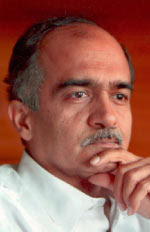 ‘Corrupt judges are afraid of me’
Prashant Bhushan, SC Advocate
Should their be an independent agency to judge the judges or to monitor the judges?
Yes, there should be. We have been advocating the constitution of National Complaints Commission.
What can be the composition of such a body?
Eminent people from all walks of life can be part of such a body. I am not in favour of putting retired judges to head such a body or be a part of it because they might have vested interests.
Have you ever felt some kind of ill-feeling among judges when you argue in the court?
No. My practice has not been affected at all. See, there are three types of judges. First is corrupt judge and since they are corrupt they are afraid of me. He knows very well that I cannot be bribed or browbeaten. The second type are rigorously honest and they support me as they feel I am cleansing the mess in the judicial system. The third kind of judges is passively honest. They are honest but they feel whatever I am doing will tarnish the image of the judiciary. Their reaction, however, has been very limited and it has not affected my professional practice.
Now, there is lot of pressure on judges to become more transparent. What is the reaction among them?
There is a problem of mindset change among the judges who by and large feel that there should not be any external force on them and the only way to change is through self-regulation. In my view this is not correct as self-regulation has failed miserably which is clear from examples of Bar Council and Medical Council. The in-house committee of judges, too, has not been very effective barring few cases such as of Soumitra Sen and Nirmal Yadav in Chandigarh.
 ‘Appointments are arbitrary’
R S Sodhi, Retired Delhi High Court Justice
Despite proven capability and competence you did not make it to Supreme Court. What could be the reason?
(Laughs)….There were more competent judges than me in the queue.
Don't you feel there is something wrong with the system of appointment of judges?
Yes, there is tremendous arbitrariness in the way judges are appointed in the Supreme Court. It does exist.
Any regrets for not having made it to the Supreme Court?
No regrets… At least I made it to the Delhi high court. I was upright and always tried to take the side of truth be it in the Jessica Lal case or any other case. Nine-five per cent of my judgments were oral and spontaneous.
Your comment on the Supreme Court criticism of Allahabad high court…
(Cuts in…) Justice Katju was Chief Justice of Allahabad high court and he knew this fact for a long time. He could have taken steps to rectify the system.
Are you aware of Prashant Bhushan's campaign against corruption in the judiciary?
Yes. He is doing a commendable job but it will be premature to say how effective the campaign will be. The basic idea is whatever system you create, if people at the helm of affairs do not understand their responsibility, it will not work be it judicial commission or collegium or anything else.
For More IIPM Info, Visit below mentioned IIPM articles.
IIPM Mumbai Campus
IIPM Excom Prof Rajita Chaudhuri
Kapil Sibal's voters want Jan Lokpal, not Government-proposed Lokpal Bill
IIPM: What is E-PAT?
Item Numbers Are The New Mantras of Bollywood
IIPM, GURGAON
Noida Extn dreams breaks as court scraps new acquisition
IIPM: Leading consistently on multiple fronts
Anna Hazare Jan Lokpak Bill Vs Government Lokpal Bill
The concerted campaign for a thorough clean-up of India's ailing judicial system has gathered momentum even as skeletons have kept tumbling out of its cupboard
India’s higher judiciary is in the news for the wrong reasons. Several judges face corruption charges. The collegium system of elevation of judges to the Supreme Court (SC) bench is under a cloud. Many SC verdicts have riled civil society for their "elitist" and "anti-poor" slant. Not long ago, the higher judiciary had dithered on the question of bringing the assets of SC judges, as well as the functioning of the Chief Justice of India (CJI), within the ambit of the Right to Information (RTI) Act. And now, ex-CJI KG Balakrishnan is in the eye of a storm over former telecom minister A. Raja's attempts to influence a Madras high court judge in a murder case.
The heat and dust that the above developments have whipped up underscore two crucial points. One, the rot runs really deep and, therefore, a clean-up of the nation’s legal system is the need of the hour. And two, the debate on making the superior judiciary – the SC and the high courts – as accountable as the other organs of the Indian republic is now on the national agenda.
The fact that a debate is on is itself a huge step forward for the cause of judicial accountability in a country where the office of a judge has been outside the purview of public discourse for decades. Although the judiciary still isn’t accountable to anyone, and the dreaded provisions of the contempt of court law are still very much in place, the media has lately been openly discussing issues related to misconduct by judges.
The man leading the charge is Prashant Bhushan, Supreme Court lawyer and convenor of the Campaign for Judicial Accountability and Reforms (CJAR). He currently faces contempt proceedings for levelling corruption charges against the higher judiciary (in an interview given to a weekly magazine). An unfazed Bhushan has filed an affidavit reiterating the very charges that have led to the contempt notice. He has, of course, received support from leading lights of India's civil society, including Aruna Roy, Harsh Mander, Nikhil Dey and Arvind Kejriwal.
Bhushan's father, Shanti Bhushan, former Union law minister and senior lawyer, has refused to tender an apology to the SC on his or his son's behalf, saying, “I am of the firm belief there is a lot of corruption in the judiciary. The question of apology does not arise. I am prepared to go to jail.”
In a landmark September 2, 2009 ruling in the judges’ assets case, Justice S. Ravindra Bhatt of Delhi high court had said: “All power – judicial power being no exception – is held accountable in a modern Constitution. Holders of power too are expected to live by the standards they set, interpret, or enforce, at least to the extent their office demands.”
Hailing the judgment, former CJI J.S. Verma, had asserted: “These principles are unexceptionable. It would be a pity if the judgement is not accepted in good grace and it is challenged in appeal by the Supreme Court, ultimately before itself!”
SC did appeal against the Justice Bhatt judgment. Earlier this year Delhi high court not only upheld its earlier ruling but also asserted the provision of the RTI Act applied to the office of the CJI as well.
Life has never been a smooth arc for Prashant Bhushan. He went to IIT Madras only to leave after a single semester. He then headed to Princeton University to study economics and philosophy. Once again, he left the course midway. Destiny had other ideas for him. He finally studied law in Allahabad University.
Bhushan now fights corruption among judges. He states that there is only one way left for him in this crusade: utilising the power of public pressure to make the judiciary accountable and corruption-free. His approach is paying dividends. CJAR, which is a group of civil society activists, has taken up cudgels against “rampant corruption” in the judiciary.
The advocate's biggest achievement to date has been the case relating to retired CJI YK Sabharwal, which hogged the limelight a few years ago. Back then, casting aspersions on judges was unthinkable. But times have changed and pressure is mounting from all quarters on SC and high court judges to become more transparent in their dealings.
Understandably, the judges aren't taking things lying down. They assert that any external monitoring of judges would undermine the independence and objectivity of the judiciary. This stand is in response to a suggestion from Prashant Bhushan supporting the setting up of a National Complaints Commission.
However, not everybody in the legal fraternity is in agreement with Bhushan's idea. Ravi Kiran Jain, senior advocate in Allahabad, tells TSI: “I feel there is a bigger rot in the bar council. A large number of practising advocates in the lower courts are no more than quacks.” The fact that judges have a conflict of interests is an open secret. Relatives of judges have been practising advocates in lower courts, high courts and even in the SC. “It is a known fact that AM Ahmadi’s daughter practised in the apex court when he was the CJI,” says Naresh Chandra Rajvanshi, president, Allahabad High Court Bar Association and ex-chairman of the Bar Council.
The SC’s current official line is that exposing judges to all-out scrutiny under the RTI Act would undermine judicial independence. But those in favour of accountability argue that ‘independence’ means independence from the executive, and not freedom to indulge in corrupt practices and other forms of misconduct.
There is an urgent need to clean up the judiciary and this is a matter of highest priority. Rajvanshi suggests a simple solution. “The initial appointment of judges should be outside their home states. This will minimise allegations being levelled on judges. About 15-16 years ago 21 judges of Allahabad high court had been transferred and after that instances of favouritism had significantly reduced.”
Some legal experts feel direct attacks on judges would undermine the image of the judiciary. However, Justice DV Shylendra Kumar runs a blog that has raised the hackles of many judicial circles. In a post on the blog www. nyayabharat.blogspot.com about a year ago, he wrote: “The judicial system in our country has been shrouded in mystery, and secrecy as is perhaps the position elsewhere in the world and judges are expected to maintain distance, aloofness and should be inaccessible to the common people…”
After the enactment of the RTI Act in 2005, the tussle between civil society and the judiciary intensified. The row over judges' assets started when Subhash Chandra Agrawal filed an RTI plea seeking information about what the judges owned. This triggered a tussle between CIC and SC. A retired district court judge told TSI, “Judges should not expect they will be sitting on piles of information forever.”
The collegium system of appointment of judges, too, has been hotly debated in the media and on other public platforms in recent years. Many legal experts have repeatedly pointed out that the system of appointment of judges is seriously flawed. There were many highly capable judges likes of RS Sodhi and former CJI of Delhi High Court AP Shah in the past who never made it to the Supreme Court.
 ‘Corrupt judges are afraid of me’
Prashant Bhushan, SC Advocate
Should their be an independent agency to judge the judges or to monitor the judges?
Yes, there should be. We have been advocating the constitution of National Complaints Commission.
What can be the composition of such a body?
Eminent people from all walks of life can be part of such a body. I am not in favour of putting retired judges to head such a body or be a part of it because they might have vested interests.
Have you ever felt some kind of ill-feeling among judges when you argue in the court?
No. My practice has not been affected at all. See, there are three types of judges. First is corrupt judge and since they are corrupt they are afraid of me. He knows very well that I cannot be bribed or browbeaten. The second type are rigorously honest and they support me as they feel I am cleansing the mess in the judicial system. The third kind of judges is passively honest. They are honest but they feel whatever I am doing will tarnish the image of the judiciary. Their reaction, however, has been very limited and it has not affected my professional practice.
Now, there is lot of pressure on judges to become more transparent. What is the reaction among them?
There is a problem of mindset change among the judges who by and large feel that there should not be any external force on them and the only way to change is through self-regulation. In my view this is not correct as self-regulation has failed miserably which is clear from examples of Bar Council and Medical Council. The in-house committee of judges, too, has not been very effective barring few cases such as of Soumitra Sen and Nirmal Yadav in Chandigarh.
 ‘Appointments are arbitrary’
R S Sodhi, Retired Delhi High Court Justice
Despite proven capability and competence you did not make it to Supreme Court. What could be the reason?
(Laughs)….There were more competent judges than me in the queue.
Don't you feel there is something wrong with the system of appointment of judges?
Yes, there is tremendous arbitrariness in the way judges are appointed in the Supreme Court. It does exist.
Any regrets for not having made it to the Supreme Court?
No regrets… At least I made it to the Delhi high court. I was upright and always tried to take the side of truth be it in the Jessica Lal case or any other case. Nine-five per cent of my judgments were oral and spontaneous.
Your comment on the Supreme Court criticism of Allahabad high court…
(Cuts in…) Justice Katju was Chief Justice of Allahabad high court and he knew this fact for a long time. He could have taken steps to rectify the system.
Are you aware of Prashant Bhushan's campaign against corruption in the judiciary?
Yes. He is doing a commendable job but it will be premature to say how effective the campaign will be. The basic idea is whatever system you create, if people at the helm of affairs do not understand their responsibility, it will not work be it judicial commission or collegium or anything else.
For More IIPM Info, Visit below mentioned IIPM articles.
IIPM Mumbai Campus
IIPM Excom Prof Rajita Chaudhuri
Kapil Sibal's voters want Jan Lokpal, not Government-proposed Lokpal Bill
IIPM: What is E-PAT?
Item Numbers Are The New Mantras of Bollywood
IIPM, GURGAON
Noida Extn dreams breaks as court scraps new acquisition
IIPM: Leading consistently on multiple fronts
Anna Hazare Jan Lokpak Bill Vs Government Lokpal Bill

